skip to main |
skip to sidebar
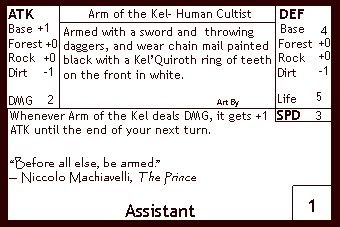
 Today's blog is the test run of what we hope to make a weekly feature. Welcome to Unit of the Week. On the left you can see the stats for this week's unit, Arm of the Kel. It is the main infantry unit of the Cult of Kel'Quiroth, and serves as an easy way to get aggressive without drawbacks. Though it has above average life and damage, it has less than average base defense and terrain bonuses and only average base attack bonus. However, the thing that makes Arm of the Kel great is its ability in conjunction with other cult members.
This unit was concieved entirely position down, that is, I needed a main offensive unit for The Cult of Kel'Quiroth so I began his design as that. Originally, his ability triggered for extra damage to a local unit and he had a +2 ATK and 1 DMG. However, this proved to be too good with the ability of other units, so I changed it. originally his life and DEF were both 4, but I changed his life to five after realizing he would be functionally worse than Skeletal Halberdier.
Arm of the Kel is quite playable in many warbands/armies, so I am going to build one to show you some of his many talents.
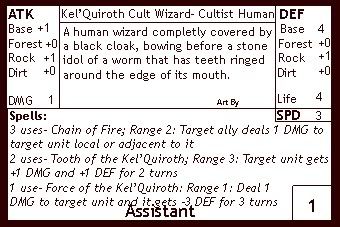
One of the best parts of Arm of the Kel is his interaction with Kel'Quiroth Cult Wizard
This is going to form the basis of a Kel'Quiroth themed army with a well-rounded mix of units.
Explorers: 3
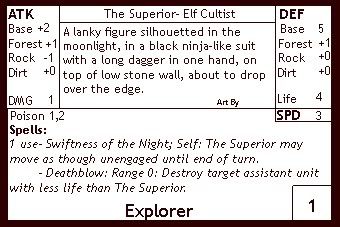
1xThe Superior- Can retrieve artifact in a pinch and takes care of tough spellcasters
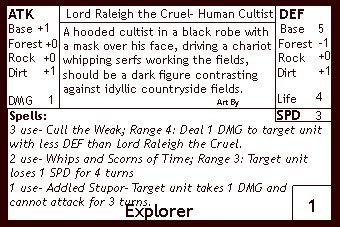
1xLord Raleigh the Cruel- Prevents opponent starting too fast and dominating the game
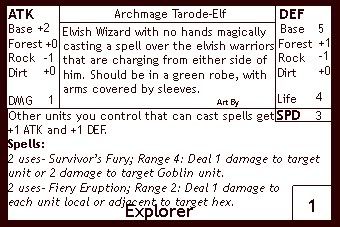
1xArchmage Tarode- Useful spells with an ability that makes your scouts and casters better
Assistants: 15
3xArm of the Kel - An obvious inclusion, and strong offensive line
3xKel'Quiroth Cult Wizard - defensive spells help, but Chain of Fire dominates the board
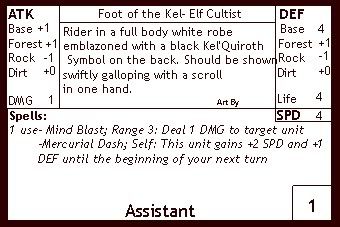
3xFoot of the Kel - scout unit fast enough to get in, but can also use spell to pick of weaklings
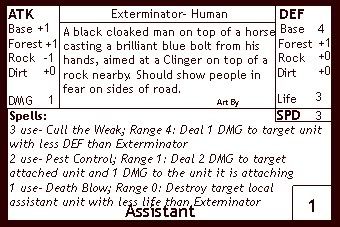
3xExterminator - Works well against units that have been targets of Force of the Kel
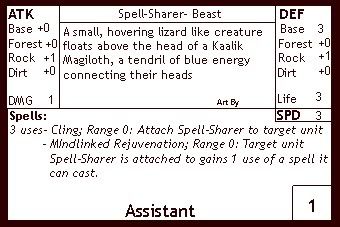
3xSpell-Sharer- Adds amazing spell uses for caster explorers and adds uses of Force of the Kel
Artifacts: 3
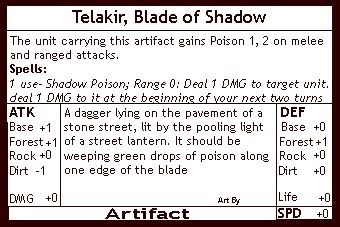
1xTelakir, Blade of Shadow- Allows you to fight your way out and even if they take it back it still poisons them
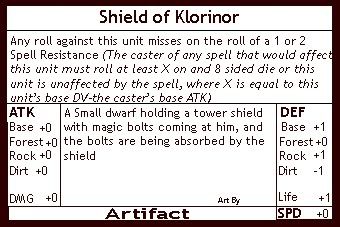
1xShield of Klorinor- this will allow units to survive longer once they pick up the artifact
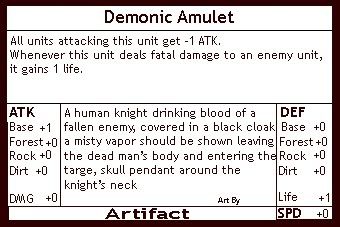
1xDemonic Amulet- Unit survives longer and is less likely to get hit
Terrain: 3
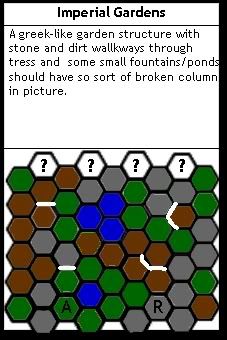
1xImperial Gardens- Fast start map, lots of forest to position Exterminators on
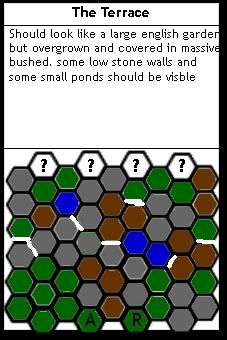
1xThe Terrace- defensible with good terrain
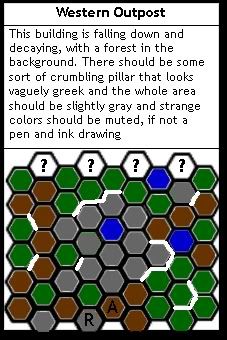
1xWestern Outpost- incredibly easy to defend, position spellcasters behind choke points
I will be filling in for Gavin's post this week, and when I asked him what he wanted to write the post about he said something strange about eating a peanut butter and jelly sandwich, which of course has nothing to do with Ruin so instead you will be getting something random from me. I thought maybe today we could talk about how a a bill becomes a law...I mean how a unit is made for the game of Ruin.
This process is rumored to start in Gavin's wandering mind in math class. After he scratches the idea for the unit down on lined paper (so primitive!) he will hand it to John some time later in the day and then John will reject it and so this would-be unit for Ruin dies.
But sometimes, if Gavin really likes the concept for a unit he will begin to debate with John and I on why it should be a unit in the exact form that he wrote it. This also too often fails but John (worn down by Gavin's persistent arguments and repeatings of "Come on!") will sometimes take the concept/stats for a unit and tweak them to be more usable by our game and no one turns out happy with this unit. Well thats not entirely true, John and I usually turn out happy and Gavin at least content that he made a unit.
This is the only filter that stands between the almost hundreds of units that Gavin pumps out every week and believe me while most of the time the filter will stop anything too powerful or (dare I say it) stupid from getting put into production, the system is not infallible. Then comes the part while we edit the unit or (if you prefer the term) neuter the unit which I (or Gavin if he gets his act together) will post about some other week.
For now, revel in the fact that you are only reading about Ruin, not designing or playing it.
Suckers...
-Vincent
Being the only person on the design team not to play Ruin, I was the butt of many a joke for some time but I finally grit my teeth and sat down (actually stood up) and played the game I had been helping design. I must start by saying that the game was fun and easy to understand even if it took some time to set up, especially since I had not created my team (army, war band) yet. I went for continuity of race and stuck with the humans. The war band was o.k. and could be successful and not successful as I was about to find out.
We flipped for terrain and I got lucky, flipping my favored map with plenty of forest which most of my army did well on. Also what I didn't know is that the lack of rock was also most excellent. Then was the building of the map which took some time. When we got started I took a defensive strategy (with a melee Explorer and caster assistants, I thought this might be a good idea) and let John's army cross sides first (which wasn't hard because he started out with mostly his scout units anyway). When combat did start I knocked out his assistants in usually one turn (because My explorer was slightly over-powered). Fighting continued in my favor until we had to leave for a party which we were already late for.
The next game I played was the day afterward, same armies, different terrain. My army did not do as well. The lack of forests meant I lost many units and often found myself overwhelmed by numerical advantage and "Polearm Formation". (a mechanic which increased his units with the ability when they were local or adjacent with each other)
This happened 2 times in a row and my conclusion is this: continuity in an army (not just in race) is important, an explorer that can stand up for itself in combat with assistants that support it is very effective, and terrain and numerical advantage can change the tide of battle.
Over all I enjoyed my first game(s) of Ruin and look forward to working on it more.
Today I rewrote the combat system to make it a little simpler and take out some old rules that no longer applied. The actual system hasn't changed, just some of the wording. Anyway, here is the Ruin Combat System, in all it's dicey glory.
Combat System in Ruin
Units must be in the same square to do combat regularly. Some units may have abilities or spells that allow them to make attacks outside of their hex. The active player refers to the player who is doing the attacking. The Combat phase is divided as so:
1.) Beginning of Combat: The active player may play abilities, then the Non-Active Player. (at this time, spells being cast and targets of those spells are declared)
2.) Choose Cells For Combat: The Active player chooses cells in which combat will take place. He cannot choose a cell that is currently unoccupied. At this time, positional effects and terrain modifiers are calculated. They do not change until combat is over. After the Active player chooses which cells he will be attacking in, the active player may abilities, then the Non-Active Player.
3.)Attacks are Rolled Simultaneously in all cells: We recommend using different color dice to represent each cell’s combat. After seeing the rolls, the active player may play abilities, then the Non-Active Player. Once done, all modifiers are applied. Nothing beyond this point can change the Defense Value or attack roll. After all of the modifiers are factored in, if the Attack Roll equals or exceeds the DEF of the opposing miniature, damage is placed on the stack. (immediately after damage is placed on the stack, spell effects are placed on the stack. However, as damage is already on the stack, most spells effects can no longer affect combat at this point)
4.) Damage Step: with damage and spells on the stack , each player, starting with the active player, may play abilities.
The base dice system is an eight sided dice referred to as a d8. A standard roll is rolling 1D8. The goal here is to equal or exceed the opponents Defense value or DEF. The opponent’s miniature’s DEF is determined by three things.
1.) The DEF value printed on the card
2.) The Terrain Modifier
3.) Spells and Effects on the miniature (this includes abilities, Boost Cards and enchantments)
The Attack roll is modified by four things
1.) The attack modifier printed on the card
2.) The terrain modifier
3.)Numerical Advantage- If you have 2 units to an enemies one in a square, you have numerical advantage, meaning that you will get a +1 bonus on those units’ attacks. If you have 1 unit and your opponent has two, you get a -1 on your attack roll. For counting numerical advantage, count the swarm value of the unit, not just how many units there are. This forms the basis of the swarm rules.
4.) Spells and Effects on the miniature (this includes abilities and active artifacts)
Example:
Joey’s Ruminator is being attack by Matt’s Kaalik Hiveling on Dirt Terrain. First, We look at the Ruminator’s Defense Value and the Kaalik Hiveling‘s base attack modifier. Joey’s figure has a printed armor value of 6 and Matt‘s has a printed attack modifier of +1. Then, we look at the terrain modifier. The Kaalik Hiveling gets +1 to attack for being on Dirt, and the Ruminator gets +0 Armor for the terrain. Then, as the Kaalik Hiveling has a numerical advantage (swarm value of 2 vs the Ruminators swarm value of 1), they get +1 on the attack roll. So as it stands now (end of phase 2, before damage is rolled)
Joey’s Ruminator: 6 DEF
Matt’s Kaalik Swarm: +3 ATK
Dice are rolled, and Matt rolls a 4. That means that with the modifier, he can hit an DEF of 7. Damage moves onto the stack, neither player has anything more to play, and the Ruminator takes damage equal to the DMG amount printed on the Kaalik Hiveling card. Joey’s Ruminator has 4 life, and the Kaalik Hiveling dealt him 2 damage. If the Ruminator can be damaged with other effects, it can die this turn.
For reference, here are the units' cards:


Two months ago, the lost continent Zantille rose from the sea in the middle of the ocean, and wondrous and strange things began to occur. People had visions of dungeons and crypts, and of massive palaces filled with people. Suddenly, in the dreams of a million ordinary people, a massive fireball shook their dream world, and they saw their metropolis sink into the sea. When the people awoke, most just laughed it off as a colorful dream. But some realized that it was a foretelling, and they left to seek the lost continent of Zantille. It was rumored that powerful artifacts were hidden in the ruined cities of Zantille, and rulers across all nations would kill to get them.
When advance scouts confirmed these rumors, the races of the world quickly sped to the New Continent. Humans, Elves, Dwarves, the hive insect Kaalik, the goblins, and many others were intrigued by the possibilities. Zantille could serve as a home for the Kaalik Hive, a treasure trove for the greedy goblins, and provide weapons of war for the ever-expanding humans. Not only did they find on Zantille amazing remnants of cites, ruined buildings and weapons and knowledge inside them, but also an unexpected group of inhabitants, the remains of the ancient Zantille, undead and reanimated by the own technology.
What length will the Explorers and their Assistants go to get what they desire? How far will the reanimated Zantillans go to protect what keeps them tethered to life, and to prevent others to suffering their same fate. Welcome, brave explorer, to the wide and unknown world of Ruin.